

Why?
As we move towards a more sustainable system based on renewable power like wind and solar, the electricity system is coming under increasing strain.
The main reason is that the times when electricity is used often don’t match up with when renewable power is available (when the wind is blowing or sun is shining)
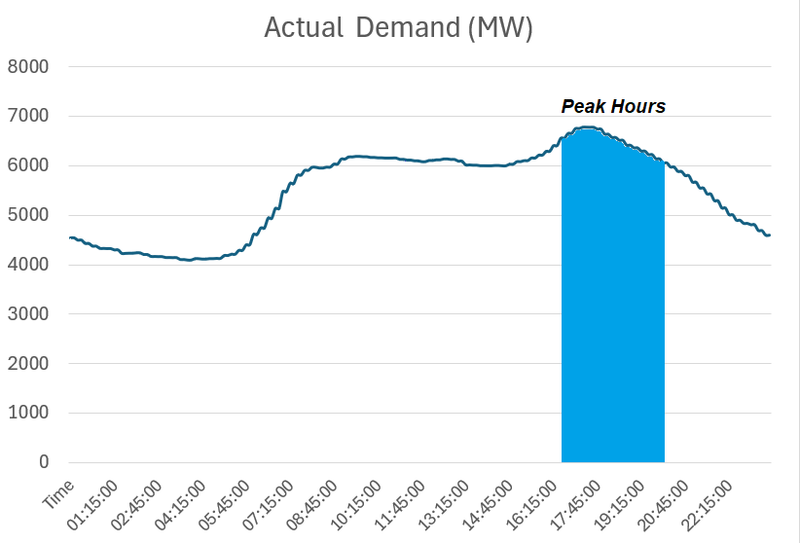
We normally use electricity at predictable times of day. For example, in the evening between 5 and 8pm when people get home from work and start cooking dinner, turning on lights and watching TV. The graph below shows real Irish electricity demand for a typical winter’s day – you can see a very clear peak of energy usage during the evening hours.
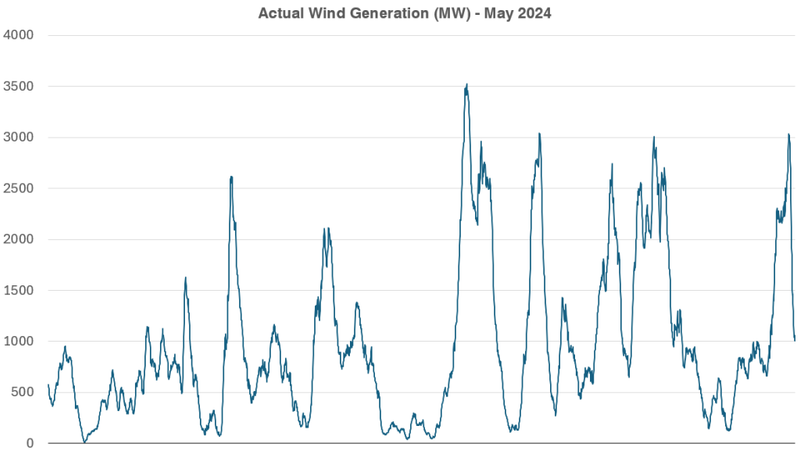
On the other hand, renewable power is generated whenever the weather allows, with power generation spiking during times of high wind or sunshine. Just look at the graph of wind generation in Ireland during May 2024 to see just how much production varies depending on the weather.
One of the key ways we can help match electricity supply and demand is to flatten out the peaks in our electricity consumption. This will make it easier to ensure that we don’t need lots of backup fossil fuel power plants to get us through the peaks when we don’t have a lot of renewable power available.
To help with this, ESB Networks have introduced the Beat-the-Peak scheme to incentivise businesses to reduce their peak energy consumption.
How does it work?
Every business which has quarter-hour metering installed is eligible for the scheme.
Using a business’ historical data, ESB Networks calculates the baseline electricity consumption during peak hours for the previous year. The business gets paid every day on which its peak energy consumption is less than the baseline amount for last year.
For example, if a business usually used 1250 kWh on average during the peak hours for winter 2023, then they will be eligible for payment every day that their consumption is below this level in winter 2024.
There are 2 payment rates under the Beat-the-Peak scheme:
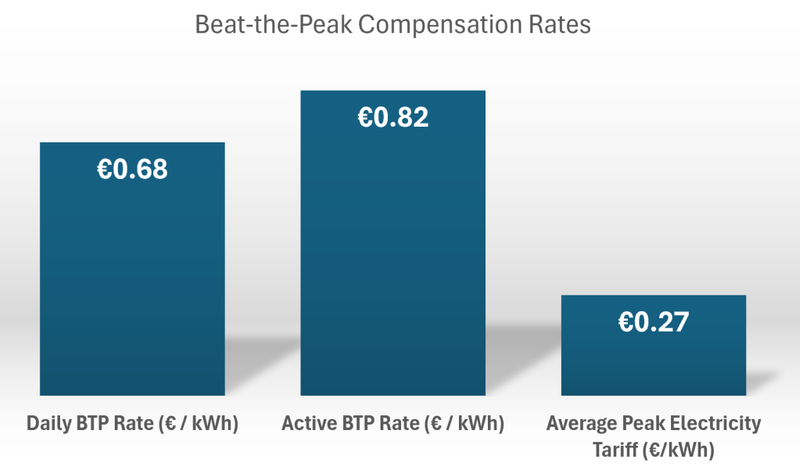
- Daily rate: The ‘daily’ rate is paid every day during the operation of the scheme. During the winter 2023/2024 season, this was up to €0.68 / kWh (depending on how successful the business is at reducing their peak demand).
- Peak event rate: There is an additional higher rate of payment available on particular days when ESB has identified that there is a shortage of power available. For example because demand is high because it’s a cold winter’s day and there is a shortage of wind power due to calm conditions. On these days, ESB Networks will pay a higher rate, up to €0.82 / kWh in 2023/2024.
If businesses can successfully manage their peak energy consumption, they have the potential to make a significant return, given the high level of payment relative to the average peak electricity rate of €0.27 / kWh.
Example
Let’s look at an example to understand how much a business can make from the Beat-the-Peak scheme.
Our example business is a medium sized energy user (such as a hotel), which uses 800 kWh of energy during peak hours.
Let’s understand how much this business could benefit from installing GridVolt’s 516 kWh liquid cooled energy storage system and smart energy management software.
In this example, the business makes no change to their energy consumption patterns other than using GridVolt’s energy management system to optimise the charging and discharging of the ESS (i.e they do not make any other energy saving or efficiency initiatives).
We assume that the business is able to make use of 95% of the BESS system’s capacity to reduce their peak energy consumption every day and the BESS has a round trip efficiency of 90%.
Assumptions
- 800 kWh baseline peak energy usage
- 516 kWh energy storage system
- 95% depth of discharge
- 90% round-trip efficiency
- No change to consumption
During a single winter season there are 10 ‘Active’ events where ESBN pays out the higher rate of €0.82 / kWh and the rest of the days the rate of €0.68 is received.
The revenue from the Beat-the-Peak program is:
- Daily event revenue: €86,010
- Active event revenue: €3,810
- Total Beat-the-Peak revenue (6 months): €89,820
This is an extremely strong rate of return which can be achieved during a single winter period alone, without considering any additional savings that the battery can provide.
If the battery is charged with off-peak electricity (at night) then an additional saving of €16,465 can be made during the 6 months giving a total return on investment of €106,285 during just one winter season!
The value of the system can be enhanced even more by combining it with a solar PV system which provides free electricity to charge the batteries whenever the sun shines!
Of course, real results may vary from this scenario, depending on the consumption patterns of the electricity user, but the potential return from the system is huge!
GridVolt’s Demand Optimisation Service
GridVolt’s smart energy management system can manage the Beat-the-Peak scheme seamlessly for businesses. GridVolt’s software learns from your energy consumption patterns and can identify the best times to operate using power from the battery to earn revenue from Beat-the-Peak.
GridVolt provides a fully managed service where we will handle all the administrative aspects of enrolling in the service and associated technical tests. GridVolt is integrated with ESB Networks to receive notice of daily events and automatically manages the energy storage system to ensure businesses receive the maximum payment while ensuring no interruption to business.
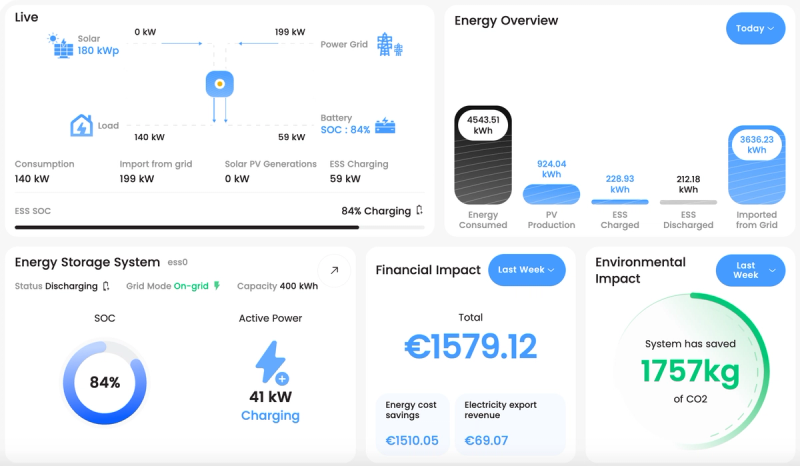
GridVolt’s Energy Manager software provides at-a-glance information about the performance of your system and how much the battery has helped reduce your peak energy consumption.
GridVolt offers a free energy consultation where we will analyse your business’ energy consumption data to estimate the cost savings and revenue opportunities from our energy storage and management solution.